http://indonherbalexpert.blogspot.com/2011/10/ginkgo-biloba-ginkgoaceae-effective-in.html

Go to Blogger edit html and find these sentences.Now replace these sentences with your own descriptions.This theme is Bloggerized by Lasantha Bandara - Premiumbloggertemplates.com.

http://indonherbalexpert.blogspot.com/2011/10/ephedra-chinese-ma-huang-treatment-of.html

Go to Blogger edit html and find these sentences.Now replace these sentences with your own descriptions.This theme is Bloggerized by Lasantha Bandara - Premiumbloggertemplates.com.

http://indonherbalexpert.blogspot.com/2011/10/echinacea-extensively-to-prevent-and.html

Go to Blogger edit html and find these sentences.Now replace these sentences with your own descriptions.This theme is Bloggerized by Lasantha Bandara - Premiumbloggertemplates.com.

http://indonherbalexpert.blogspot.com/

Go to Blogger edit html and find these sentences.Now replace these sentences with your own descriptions.This theme is Bloggerized by Lasantha Bandara - Premiumbloggertemplates.com.

http://indonherbalexpert.blogspot.com/2011/10/black-cohosh-cimicifuga-racemosa-very.html

Go to Blogger edit html and find these sentences.Now replace these sentences with your own descriptions.This theme is Bloggerized by Lasantha Bandara - Premiumbloggertemplates.com.

Tuesday, 25 October 2011

Benefits of Amla Herb Indian Gooseberry

Benefits of Amla Herb Indian Gooseberry
herbalist , healthy , environment

Amla is commonly known as amalaki, Indian gooseberry and medically known as emblica officinalis. Amla is a natural antioxidant and is a popular home remedy. Amla prevents early aging of human body. Amla is good for hair.

Amla is good for respiratory function. Amla treats and prevents skin disorders. Natural medicine suggests Amla in the treatment of eye disorders. Fruit of Amla is beneficial in treatment of human scurvy. Amla is a pure herb and is called the king of herbs. Amla or Amalaki extract contains a lot of vitamin C and cytokine-like substances called as z-riboside, zeatin, and z-nucleotide.

Amla also has plenty of natural bioflavonoids, which are mandatory for the proper function of vitamin C and help protect and strengthen human cell membranes from oxidative damage. If you agree that gold is the best mineral, then you have to agree Amla is the best herb. Amla or Indian gooseberry is a natural herb, which is frequently and consistently used in natural medicine, especially Ayurvedic medicine. Amla contains up to 720 milligrams of vitamin C/100 gram of fresh amla pulp or 900 milligrams of vitamin C/100 gm of amla juice.

Amla remains stable in heated temperatures, which means this natural wonder herb does not lose its value while or after processing. It is interesting to note that Amla also contains dried form of tannins and that is why it is able to retain most of vitamin C content.

When a person takes one to two capsules of Amla or Indian gooseberry twice daily with meals for three months, it allows several weeks of long-lasting benefits but it is recommended to take Amla capsules on a consistent basis as it is a natural product and treats the disease from its roots and not just the symptoms which is done by allopathic medicine. Also, long-term use of Indian gooseberry capsules has not shown any adverse effects on human body as it is a natural product and is free of any side effects.

Natural Herb Amla or Indian gooseberry fruit

Amla fruit juice contains approximately twenty times as much vitamin C as orange fruit juice contains. Amla fruit tissue has nearly 160 times the concentration of ascorbic acid found in one apple and approximately three times the concentration of protein. Amla fruit also contains a large amount of concentration of most beneficial minerals and amino acids than what is contained in apples.

Fruit ash of Indian Gooseberry (Amla) contains 4 zinc, 3-ppm copper, and 2.5 chromium. Amla is also commonly called an adaptogenic herb by various herbalists throughout the world, as it boosts the immune system and is helpful in prevention of immunocompromised conditions

Benefits of Amla or Indian Gooseberry

Amla or Indian Gooseberry is a strong rejuvenator.

Amla or Indian Gooseberry balances stomach acids.

Amla or Indian Gooseberry enhances food absorption.

Amla or Indian Gooseberry is a natural antioxidant, which prevents premature aging of cells.

Amla or Indian Gooseberry is popular in prevention and treatment of respiratory tract disorders. Indian Gooseberry or Amla strengthens the lungs.

Amla or Indian Gooseberry improves brain function.

Amla or Indian Gooseberry detoxifies and cleans the body out of millions of toxins.

Amla or Indian Gooseberry juice enhances fertility when the patient regularly consumes it.

Amla or Indian Gooseberry boosts immunity and strengthens the immune system.

Amla or Indian Gooseberry acts as a natural coolant in beneficial in heat rash or heat intolerance.

Amla or Indian Gooseberry is beneficial in diarrhea, bleeding, and dysentery.

Amla or Indian Gooseberry is rich in vitamin content and is really useful for treatment of scurvy.

Amla or Indian Gooseberry is popular for treatment of skin disorders
Eye troubles are also addressed by Amla
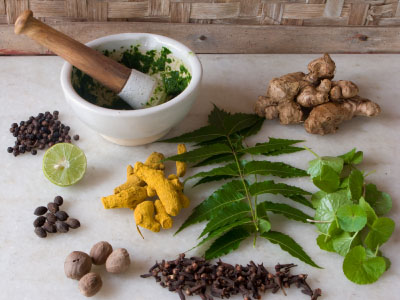
Amla or Indian Gooseberry prevents premature graying of hair and hair loss.

RESOURCES

India's Ayurvedic Practice

India's Ayurvedic Practice
herbalist , healthy , environment


Turmeric, like other herbs and spices, is a principle herb in Ayurveda -- India's ancient holistic health system. Ayurveda means "knowledge of life" -- with herbs lying at the very heart of Ayurvedic practice.
Turmeric Ayurveda Practice Turmeric has multiple uses within Ayurveda, including blood cleansing and maintaining healthy skin.* In Ayurvedic terminology, turmeric includes the following:

Verdana sthapana -- promotes your healthy nervous system and helps you with occasional discomfort*

Sangrahani -- supports your absorption of vitamins and minerals*

Anulomana -- helps you in purging out wastes and building healthy blood*

Rakta stambhaka -- promotes the wellness of your circulatory system*

And this is just the tip of the iceberg when it comes to Ayurvedic turmeric uses.

What does this mean to you?

Simply, turmeric has been used in Indian culture for thousands of years for a multitude of health-promoting reasons.* An estimated 500 million Indians still use the spice today.

What's Your Best Sources for Turmeric?

So by now, you might be wondering about potential sources of turmeric.

Well, you may already know you can find it in the spice aisle of your local grocery store. But as mentioned earlier, I don't recommend using your local grocery store, due to the quality of their herbs and spices.

Even though there may be some good spices available there, it's very difficult to verify their purity and potency.

Also, the turmeric powder you buy in your store is a spice. It doesn't necessarily come from high-quality organic herbs -- and is not produced using certified organic processes, causing you to risk missing its healthful benefits.

What's more... with store-bought turmeric powder, you'll probably just use it once in awhile to cook with -- not on a daily basis to consistently take advantage of the benefits it offers.

So, what other options do you have?

I recommend searching for a high-quality, 100% organic-based turmeric supplement.

But there are some things you should watch for when choosing a turmeric supplement.
Avoid Unnecessary Fillers, Additives, and Excipients

When I did my own research on available turmeric supplements, I found a surprising array of choices.

Besides, curcumin and curcuminoid ingredients, I found products with questionable ingredients like fillers, additives, and excipients. An excipient is a substance added to the supplement as a processing or stability aid.

One ingredient, magnesium stearate (also know as stearic acid), is a potentially toxic metal additive from pill production.

Another ingredient I found in many turmeric supplements, Dibasic Calcium Phosphate (DCP), may even inhibit the absorption of essential minerals within your system.

There are others you may find as well, but the bottom line is... you don't want or need these ingredients in your turmeric supplement. Some pose potential health risks -- and all are unnecessary.....RESOURCES

Certified Organic Producer Committed to Quality Processes

Certified Organic Producer Committed to Quality Processes
herbalist , healthy , environment


The key to delivering an organic supplement rests in the manufacturer's commitment to quality and excellence.

In fact, I believe that without these quality processes in place, it really doesn't matter what organic herbs are harvested. You simply won't end up with a top-notch consistent organic formula. In turn, you won't receive the maximum potential value of the herb.

So, it's important to highly scrutinize and research the manufacturer's credentials.

In fact, you may not be able to stop with the manufacturer alone. Keep in mind, the total organic process involves planting, cultivation, selective harvesting, and then producing and packaging the final formula.

Here's the type of certifications I recommend you look for:


Hazards and Critical Control Points (HACCP) -- International food safety certification that World Health Organization (WHO) standards are met  

Safe Quality Food (SQF) -- HACCP-based food safety and risk management system covering the identification of food safety, quality risks, and the validation and monitoring of control measures

Good Manufacturing Practices (GMP) -- International certification verifies all required practices necessary for an effective food safety program are followed

International Organization for Standardization (ISO) 9001:2000 -- International standard for quality, safety, ecology, economy, reliability, compatibility, inter-operability, efficiency, and effectiveness

Orthodox Union (OU) Kosher -- Certifies compliance for Kosher observers and followers

International organic certificationssuch as: USDA, EU, and NSOP

Share

Twitter Delicious Facebook Digg Stumbleupon Favorites More